
The final boss and 707 kilometers home
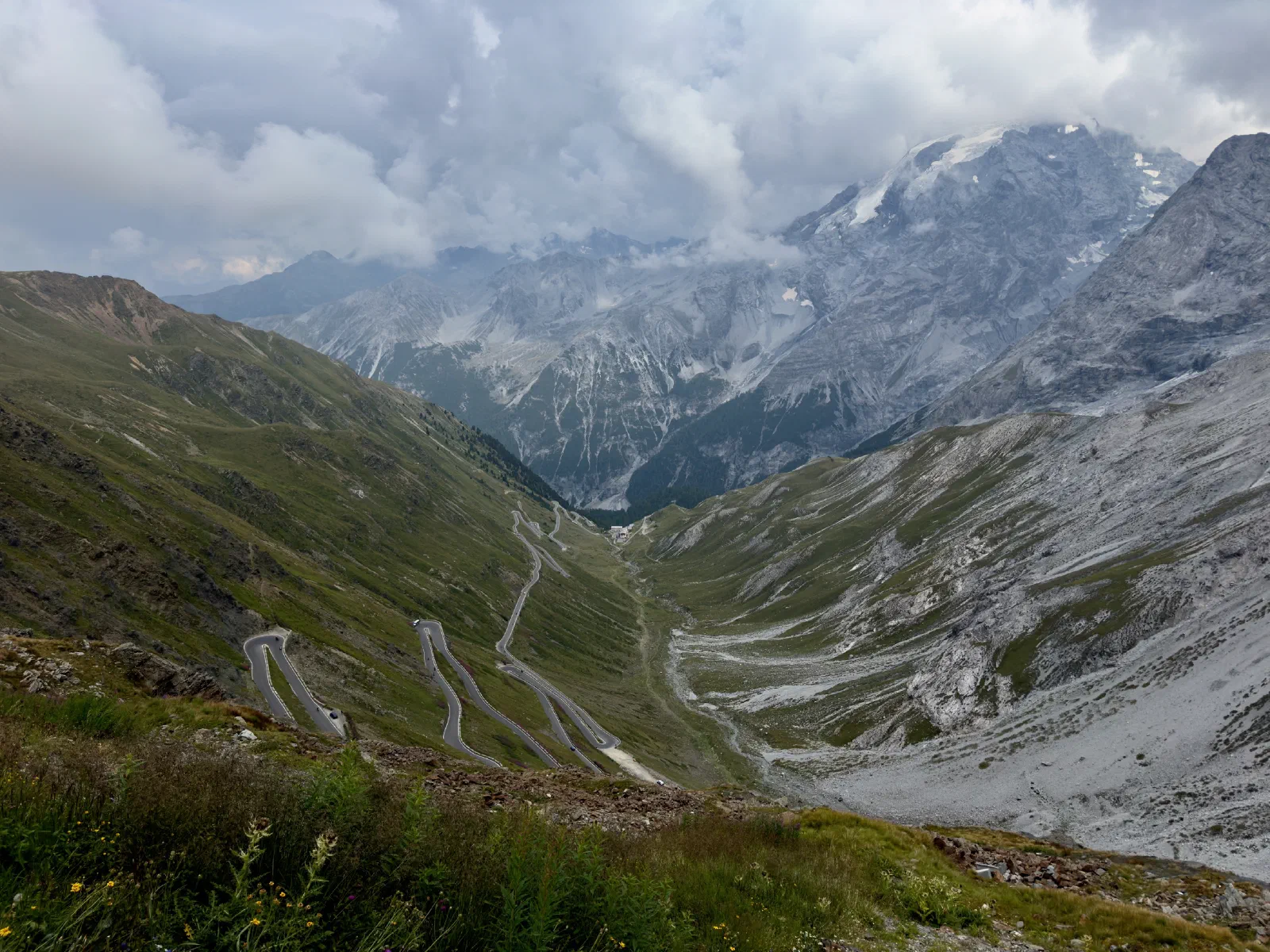
Five weeks on my own bike. Before that, eighteen years of not a single meter. A naked bike. Lisa on the back. Luggage. Late summer.
And I rode up to the Stelvio Pass.
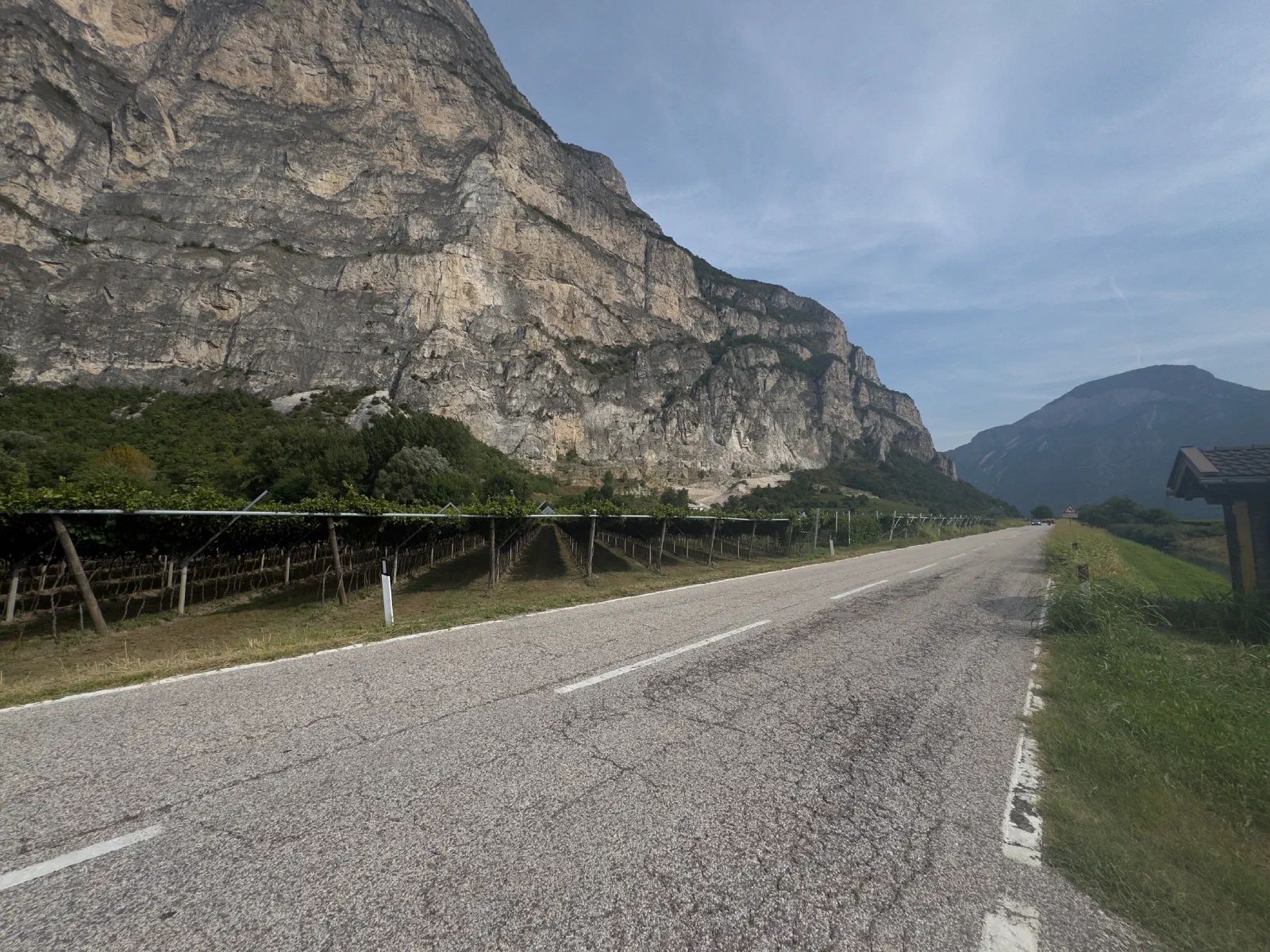
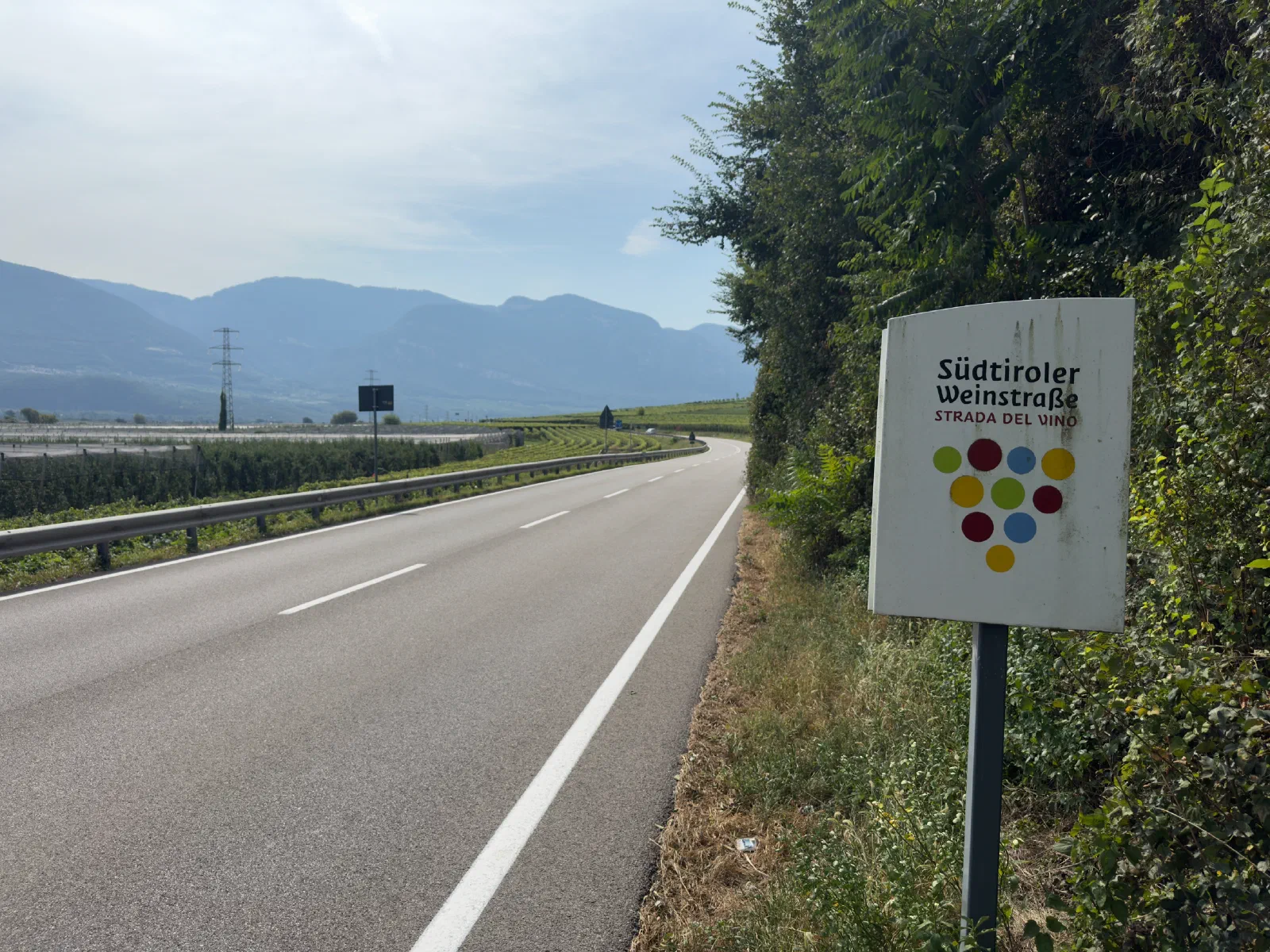
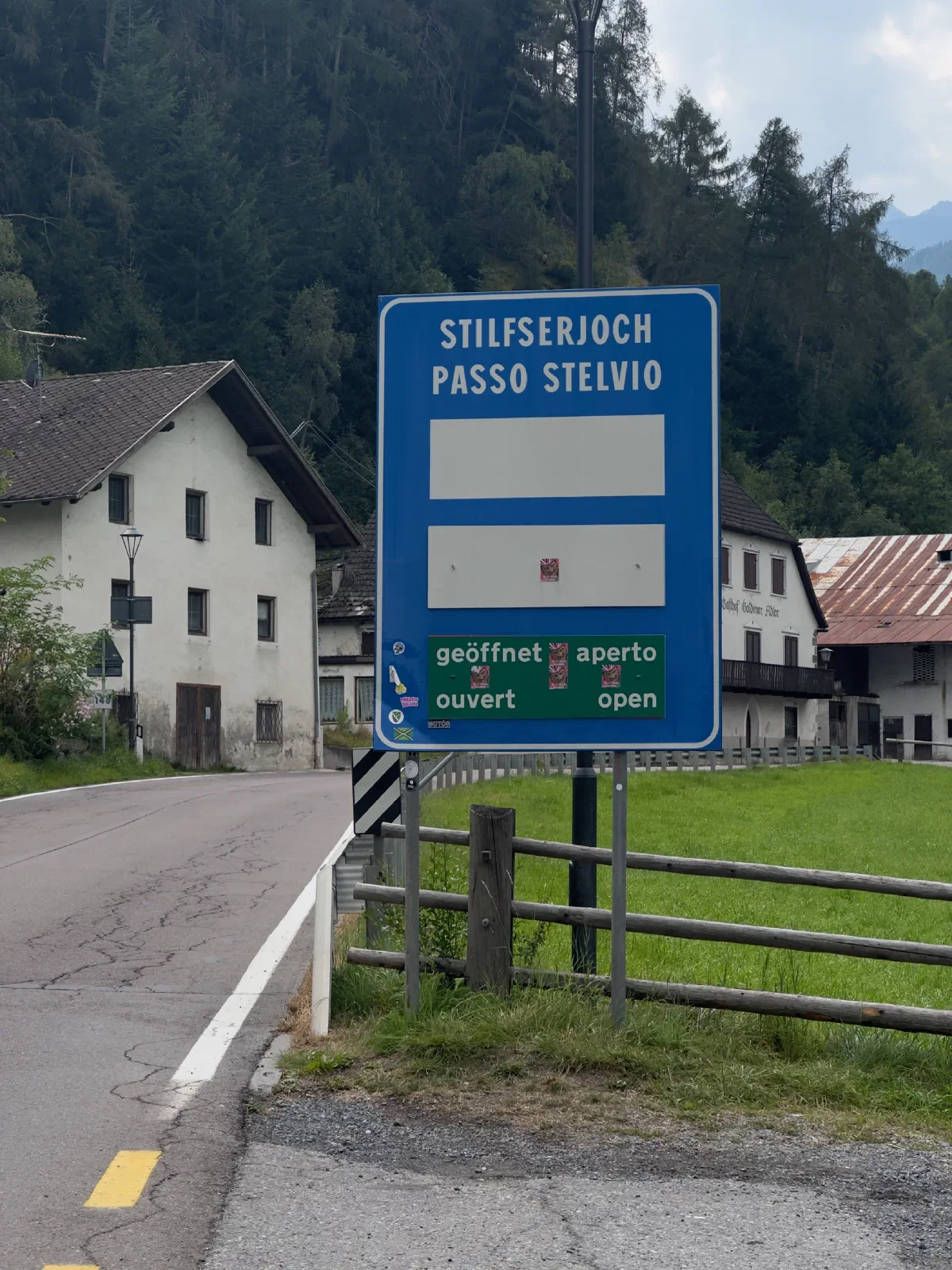
It was Sunday. Around ten we left Comano Terme, heading north, and at midday we took a break of a good hour in the Val Venosta. At Prato allo Stelvio the Prato side of the pass begins.
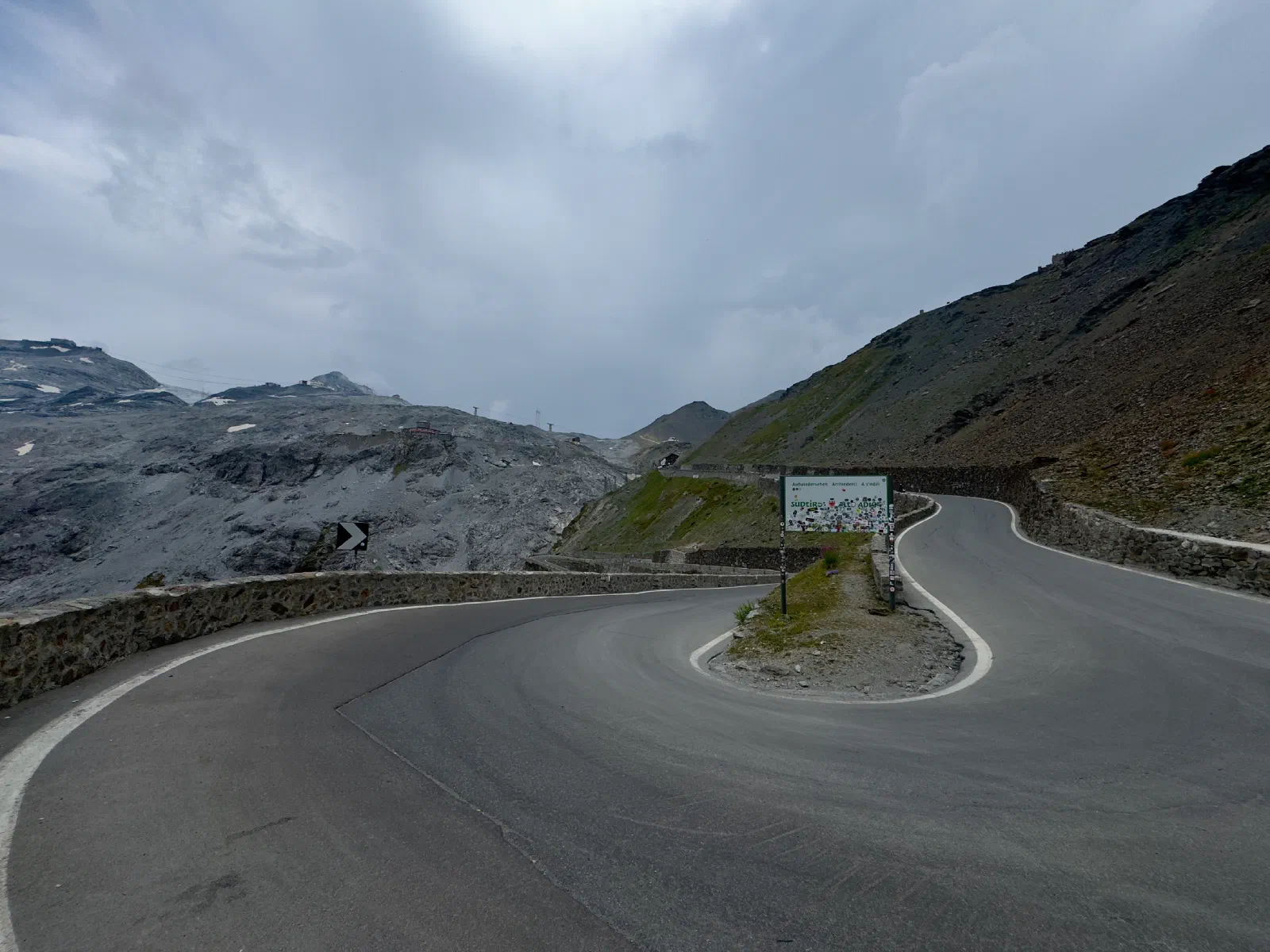
In hindsight that was stupid three times over, and I’m listing the mistakes one by one because each one on its own was avoidable. First: beginner. Second: with Lisa and luggage, so the bike handled completely differently from the way it had in my few weeks of riding. Third: of all things, the final boss. There’s hardly a pass in Europe that forgives beginners so little: 48 numbered hairpins, and traffic in every one of them.
The road itself is a feat of engineering you take your helmet off to. It stacks itself in hairpins against a wall that doesn’t want a road, again and again, without a break, all the way up to 2,757 meters, a pattern of loops that looks like a circuit diagram from a distance and like work up close. Every hairpin is numbered, which is psychologically cruel, because in the first third you already know how many are still to come.
Riding-wise it wasn’t fun, it was craft at the limit of my ability. First gear, sometimes second. Constant throttle, no jerking. Eyes far into the hairpin and not on the drop. And the whole time the knowledge that a naked bike in first gear at 15 km/h in a hairpin, with less steering lock than an adventure bike, with luggage and a second person on top, is a very unstable contraption.
And then the camper vans and RVs.
That was the day I started to hate them. I’m describing it precisely because it was the most dangerous behavior on the whole mountain and nobody means any harm by it. An RV drives into the hairpin. It comes out. And then it stops, not in the hairpin, but five meters beyond it. Because the view is nice there. Because somebody wants a photo. Because the driver is thinking for a second. The things stand stable on four wheels, cheerfully stop right behind the hairpin and have no idea what they’re doing.
Stopping five meters behind a hairpin means, on this road: you’re invisible to whoever is still in the hairpin. He steers around the corner at full lock, leaned over, at the limit of the turning circle, at the limit of balance, and then there’s a white wall. A motorcycle doesn’t stand stable. In a hairpin least of all, and under a beginner even less.
We all know the videos from the internet where motorcycles just tip over on the inside of an uphill hairpin. I didn’t know them yet at that point.
Once that day it got close. Really close.
I was in the hairpin, full lock. Directly behind it my lane was blocked by one of those “parkers,” and the bike was already too slow for the lean it was in. The point where you can still catch it with your leg had passed. It started to tip.
And then came the one thought, and it was the only one that came: Throttle.
Not a reflex, not chance, not a lucky shot. It was the only thing that shot through my head for stabilizing, and it was right. I knew that speed brings stability. That’s not a recipe. That day, as a beginner, I made the right decision. When I see other riders’ videos of these hairpins on the internet today, I’m proud that I didn’t tip over. That’s the only part of this story I’m proud of.
The price of that move is that you shoot forward, and precisely where you’re steering, which means across the center line, into the oncoming lane. I had checked it before I rolled on the throttle, and it was clear. And that was the luck: at that moment nobody was coming. Five seconds earlier or later it would have become a different story, and I couldn’t have changed anything about it. The skill was mine. The empty oncoming lane wasn’t.
Just below the summit we took a breather on a viewing plateau. We didn’t know that no more hairpins were left from there to the top.
Arriving at the top: a crowd. Souvenir stands, sausage stands, hundreds of motorcycles, road cyclists, tour buses, searching for parking at walking pace. As bad as Rimini.
We didn’t stop again at the top. Not even at the shops.
And honestly, three things came together for that. The adrenaline from the hairpin was still sitting completely in my forearms. Then an angry, uncomprehending head shake at the camper vans and RVs - people who turn a road where someone has just been fighting for control into a photo stop, without a second’s thought for what’s coming out of the corner behind them.
And third, entirely independent of the day: I don’t like places like that. I’ve never understood what you’re looking for at a place that exists only because lots of people want to go there, and where you can then buy stickers, refrigerator magnets and a bratwurst at triple the price. That isn’t a destination. That’s a gift shop with a view.
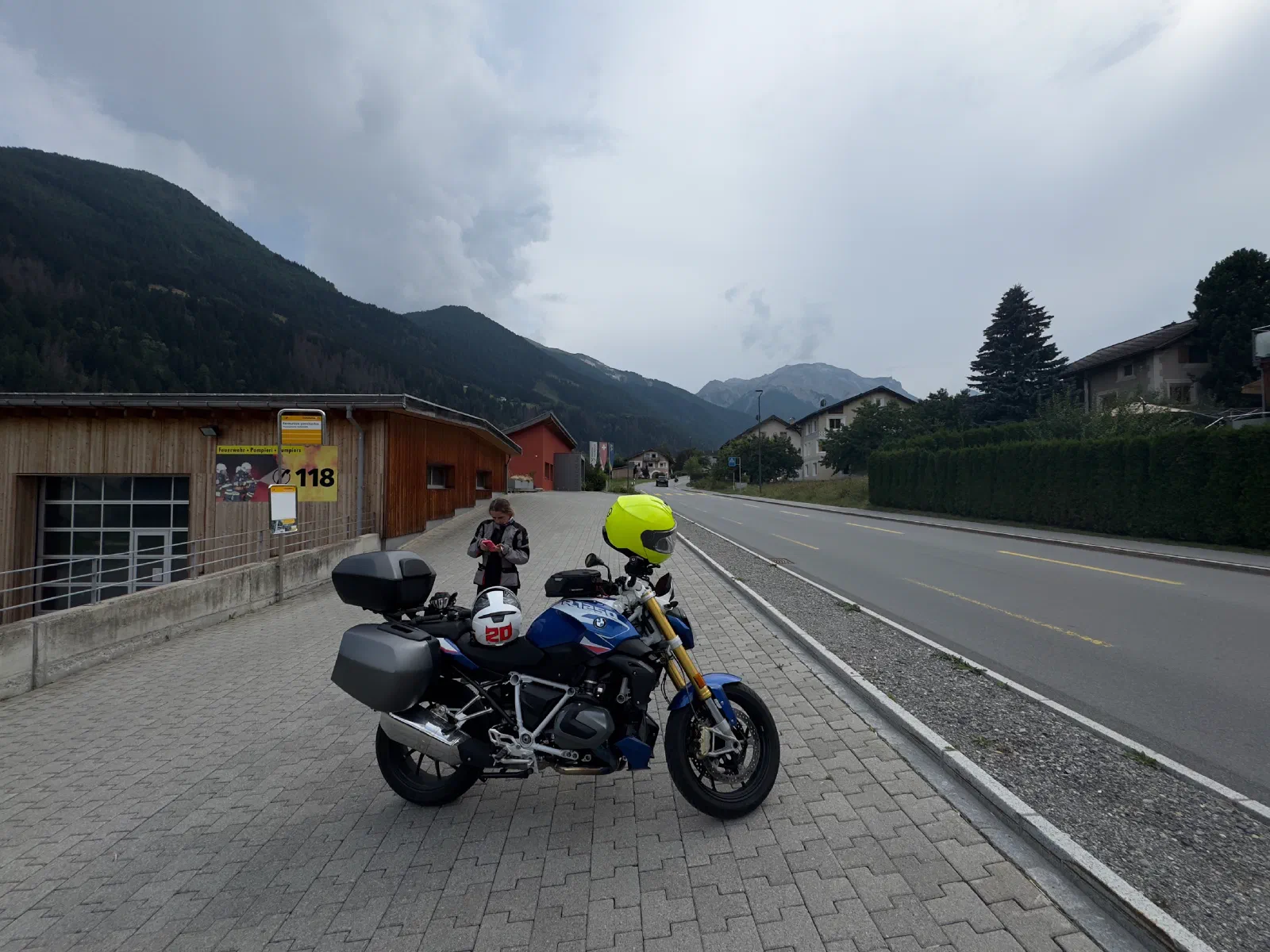
So straight through, and immediately back down the other side: over the Umbrail Pass into Switzerland, to Santa Maria and Müstair, then back into Italy, over the Reschen Pass into Austria, over the Fern Pass to Füssen. The seventh country of the trip came late and stayed short.
Escape to the north. The thought at the time, word for word: Not again for the next ten years, please.
The rest area
And then comes the part where I’m not just a beginner but simply the idiot.
Around 8:30 we were on the Autobahn near Füssen, in the twilight. In the back of my mind a storm front coming from the west that I wanted to outrun at all costs.
And somewhere along the way I switched off the intercom.
The unit didn’t fail. I switched it off. Quite deliberately, with a reason that is correct taken on its own: the intercom channel eats noticeably more battery than the plain navigation prompts. The remaining charge was low, and I needed it for the prompts: on the first day the intercom’s battery had gone dead and no more prompts came. So I switched off the expensive thing and left the cheap one running.
That’s a completely rational resource decision, and it was the worst mistake of the whole day.
Because look at what I actually prioritized. I had two channels and power for one. One told me where to go. The other was the only authority on that motorcycle that could have told me whether I should still be riding at all. I kept the route guidance and switched off the correction loop. I saved the nav and muted the human.
And because I had done it myself, the consequence didn’t register. A failure makes noise. A decision doesn’t. I just rode on, in peace, with no feedback, and took the silence for agreement.
After a good hour and a half on the Autobahn, Lisa tapped me on the shoulder.
And then again. And then in a way that ruled out any interpretation: Pull off. Next rest area.
By then it was already dark.
We pulled off. She took her helmet off before the bike had properly stopped and nearly screamed at me:
“You don’t really want to ride all the way home now?”
I said, “Yes, I do.”
She looked at me, said nothing more, walked across the lot, lay down in the dark on one of those concrete benches next to the trash can, in full gear, helmet beside her, and said:
“I’m not going one step farther.”
And then she lay there.
I stood next to her. Twenty minutes. Two adults at a rest area on the Autobahn a little after ten, one standing, one lying down, both in riding gear, not a single syllable between them. Cars came, people got out, went to the restroom, came back, and looked. The way you look when you’re not sure whether you’re witnessing something you should step in on.
At some point those looks became more unpleasant to her than I was. She got up, put her helmet on, climbed back on and didn’t say a word.
Since then I call that quietly cooperative. It’s the politest wording I can find for it, and it glosses over nothing: she wasn’t convinced. She gave up.
A little after 12:30 at night we rolled into the yard at home.
I got off and stood next to the bike for a minute because my legs didn’t cooperate right away. The boxer ticked as it cooled. Above us no wind, no weather, a summer night sky straight out of a catalog. The front I had fled from never arrived that evening.
And that is the real price I paid that day, and it wasn’t charged to my account.
It was the ninth day. The vacation wasn’t over yet. We could have checked into a guesthouse somewhere in the early evening, showered, had a beer, eaten, had the last evening, and ridden home rested the next morning. There was no deadline. There was no reason.
I took that evening from her. Not out of necessity, but because I was tired and so stopped noticing that I was making decisions at all. Nine days of trust, and on the last one I traded it for nothing.
She was furious. Rightly so.
Day 9 in numbers
| Item | Value |
|---|---|
| Start | Comano Terme (Trentino), around 10 a.m. |
| Destination | home in Franconia, arrival a little after 12:30 a.m. |
| Distance | 707 km |
| Highest point | Stelvio Pass, 2,757 m, Prato side with 48 numbered hairpins |
| Other passes | Umbrail Pass, Reschen Pass, Fern Pass |
| Countries | Italy, Switzerland, Austria, Germany |
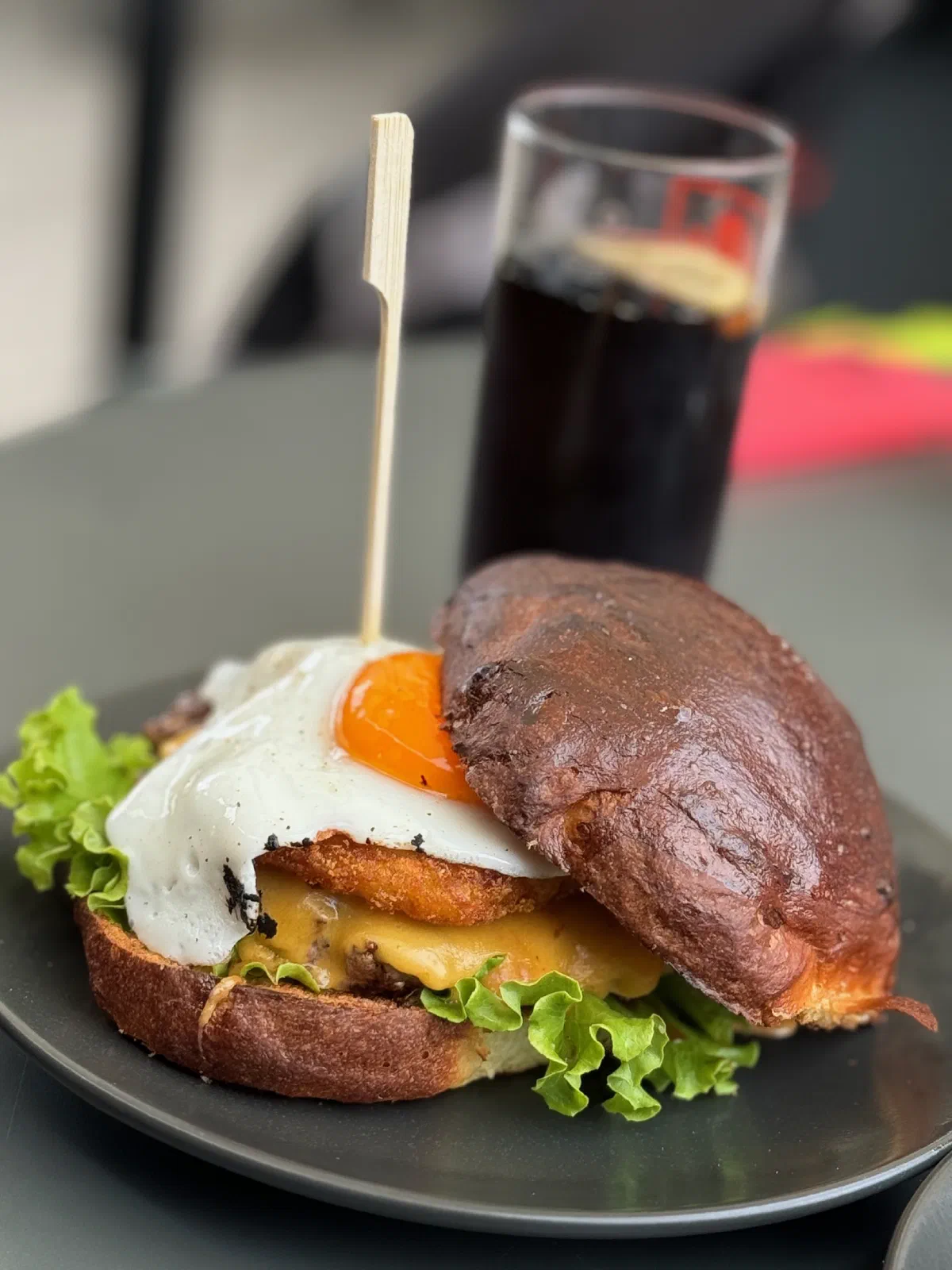
| Breaks | Lunch in the Val Venosta, viewing plateau just below the summit, rest area on the Autobahn |
| Overnight | none, rode straight home |